A Five-Minute Listening Walk Around the Block
A five-minute listening walk around the block helps you notice nearby sound layers without choosing a route, setting a pace, or reaching a destination.
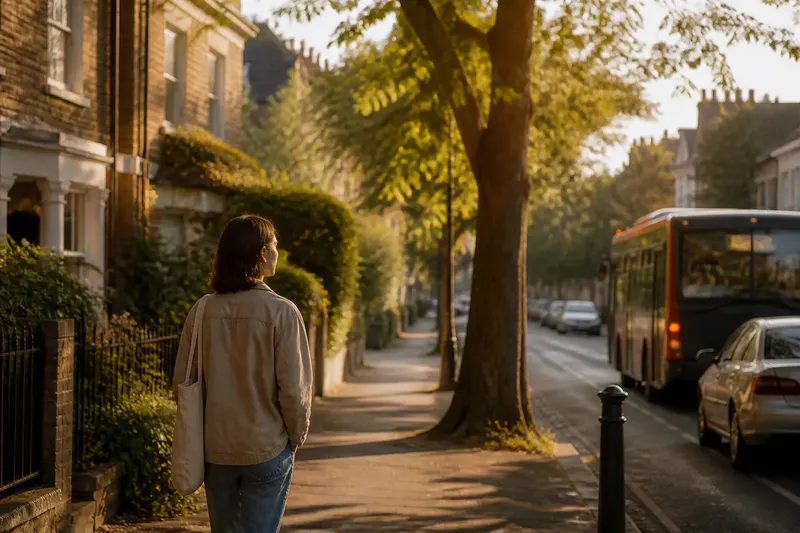
You step outside to take out the recycling and hear a sparrow call from somewhere above the parked cars. A bus sighs at the corner; a gate clicks behind you. A five-minute listening walk around the block starts with that kind of ordinary sound and asks for nothing more than a little attention.
There is no route to complete, pace to keep, or destination to reach. Walk where it feels easy, pause if you like, and let the sounds around you determine what you notice next. The point is not to identify every noise. It is to hear how a familiar place changes as your attention settles.
What makes this a listening walk?
On a usual walk, sound tends to sit behind errands, conversation, or thoughts about where you are going. A listening walk turns it into the main thing you attend to, without making it a task you have to perform well.
That distinction matters. You do not need to name a bird, recognize a car model, or decide whether a sound is pleasant. Start with simple qualities: near or far, steady or brief, smooth or rough. Those descriptions give your attention somewhere to rest without turning the outing into a quiz.
A familiar block is useful because you already know its broad shape. You can spend less attention figuring out where to go and more noticing what is audible from one spot to the next. Familiarity also makes change easier to hear: a window opens, a delivery truck arrives, or the wind shifts through street trees.
How do you begin without planning a route?
Choose an easy moment to step outside, such as after lunch or before heading indoors for the evening. Leave your headphones and audio playing at home. A phone can stay in your pocket; there is no need to track time closely or record what you hear.
Start near your door, then follow whatever ordinary way around the block feels natural. You might take the sidewalk on the sunny side, cross at a familiar corner, or stop beside a hedge. If you reach a point where turning back feels right, turn back. The walk has no required shape.
- Let your pace be comfortable rather than deliberately slow or brisk.
- Keep your gaze relaxed and your attention on the sounds, not on searching for their sources.
- Notice one sound at a time, then allow another to come forward.
- Pause where you feel comfortable, or keep walking through quiet patches.
- End when the outing feels complete, even if you have not covered the whole block.
For a gentle sense of time, you can leave when a kettle begins to boil and return before you expect it to finish, or simply use the next natural transition in your day. The clock is optional. A strict timer can distract from the very listening you came out to practice.
What layers can you listen for?
Begin with the broad background: traffic, wind, distant voices, or the low hum of neighborhood activity. You do not have to separate every element. Just notice whether the background seems continuous, comes in waves, or fades as you move.
Then listen for sounds at a middle distance. These might be a neighbor closing a car door, footsteps on a sidewalk, or leaves stirring across the street. Notice how they appear and disappear. A sound can become part of the background once it continues, then stand out again when something changes.
Finally, bring attention to nearby details: your shoes against the pavement, fabric shifting at your sleeve, a latch catching, or a bird calling from a branch. These quieter sounds may have been present all along. Listening does not require making them louder; it only asks you to notice them when they arrive.
Try moving attention between these layers rather than holding it on one. A distant rumble can frame a close footstep; a sudden call can briefly interrupt both. The block becomes less like a single wash of noise and more like sounds overlapping, receding, and returning.
What if the block is noisy or unusually quiet?
A loud street still offers layers. Let the traffic remain the broad backdrop, then notice a nearer sound that is not part of it, such as shoes crossing a driveway or a tree branch tapping a fence. If the noise feels uncomfortable, choose a quieter side street or head back indoors. This is an invitation, not an endurance exercise.
On a quiet block, the gaps are part of what you hear. You may notice a refrigerator compressor through an open window, a distant lawn mower, or a brief stretch when no distinct sound asks for attention. Silence does not have to be perfectly empty. It can simply mean that nearby sounds have thinned for a moment.
If a sound brings up a thought or memory, let that happen without following it far. You can return to listening by noticing the next sound, or by hearing the space between sounds. There is no need to clear your mind before you continue.
Which questions come up on a listening walk?
Do I need to walk for exactly five minutes?
No. Five minutes is a low-pressure suggestion, not a target to hit. Stay out for a little while or turn back sooner if your attention, comfort, or schedule calls for it.
Should I identify the sounds I hear?
Only if identification feels enjoyable, and it is not required. Describing a sound as distant, rattling, soft, or intermittent is enough to give it attention without stopping to solve it.
Can I take this walk with another person?
Yes, if you agree to leave room for quiet. You might walk together without conversation for a short stretch, then share one sound each afterward if that feels natural.
What if I keep thinking about my errands?
That is ordinary. When you notice your thoughts have wandered, listen for the nearest sound and begin again there; no special reset is needed.
How can you bring the listening indoors?
When you return, take a moment at the door to hear the change between outside and inside: perhaps the street fades while a fan or clock becomes noticeable. You do not have to write anything down. If one sound stays with you, you might simply name it in your mind before moving on.
Say you leave your apartment after hearing a delivery van pull away. As you walk, you notice a steady ventilation hum, then a child’s scooter passing, then the light scrape of your own shoes at a corner. You turn back when you feel ready. The observable result is not a completed route or a special mood; it is a few sounds you might otherwise have let blur together.
What is not worth the effort: chasing a sound to identify it, searching for a perfectly quiet street, or repeating the walk until it feels profound. A listening walk works best as a small opening in an ordinary day, not another standard to meet. The next time you step outside, use the sounds already on your block as your only invitation.