The Multitasking Myth: Why Switching Has a Cost
The multitasking myth can make divided attention seem effortless. Learn to spot competing tasks, leave clear return cues, and choose what deserves focus.

You stir soup while reading a message, then look back at the recipe and lose the line you were following. The multitasking myth can make this feel like doing both jobs at once, even though your attention may be moving between them.
Some activities fit alongside one another, especially when one is familiar and needs little active thought. Other tasks compete for the same attention: reading instructions while composing a reply, for instance. The useful question is not whether you can multitask in general. It is whether this particular combination is leaving you confused, distracted, or unable to continue comfortably.
People experience these moments differently, and the feeling of a switch can vary with the task and the setting. Rather than treating every interruption as a failure, notice what happened and choose a practical response.
What does the multitasking myth miss?
“Multitasking” can describe activities that genuinely overlap, such as walking a familiar route while listening to casual conversation. It can also describe shifting between tasks that each need active attention. Reading a detailed message while following a recipe is more likely to involve taking turns between the two than giving each full attention at the same time.
That distinction is useful without turning it into a rigid rule. If you return to a task and find that you have lost your place, missed a direction, or need to reread something, treat that as a sign that the combination may not suit you in that moment. Another person, or another task, may feel different.
The aim is not perfect concentration. It is to recognize when two activities are making an ordinary moment harder to follow, then adjust in a way that fits the situation.
How can you make a task easier to resume?
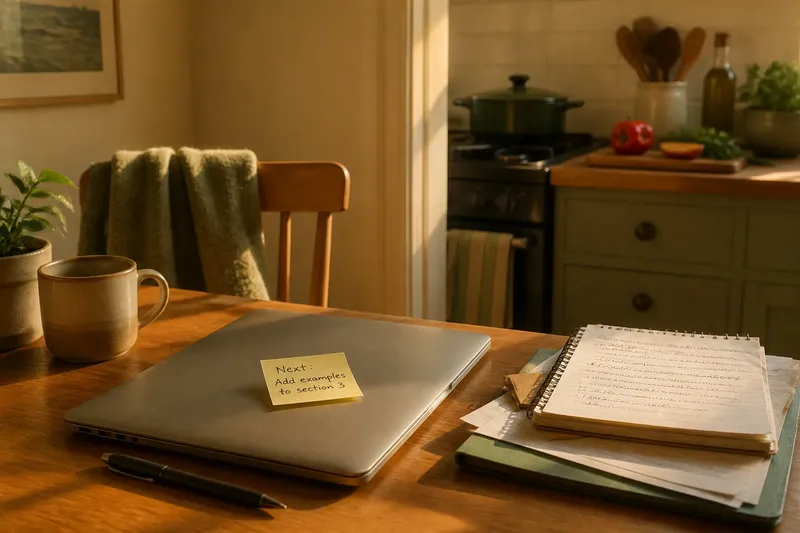
If you pause in the middle of something, leave a cue that names the next action. A bookmark beside the paragraph, the recipe open to its current instruction, or a note saying “check the delivery question” can make the return more direct.
Say you are sorting mail when a family message arrives about an appointment. You have opened three envelopes and have not checked the calendar yet. You set the envelopes aside, write “check appointment time” on a scrap of paper beside them, then answer the message. When you come back, the note points to a specific next action; if the message has changed your plans, you can decide whether the mail still needs attention now.
A cue should be brief and plain enough to use without decoding. A broad reminder such as “finish everything” is less helpful than a note naming the next visible action.
What can you do when alerts keep pulling you away?
Before opening your phone, name the detail you need. If you are checking a calendar time, go to the calendar, find the appointment, and close the app. If another message can wait, note that it needs a reply rather than starting that reply in the middle of a different task.
A small “later” note can hold unrelated thoughts while you finish what you chose to do. Treat it as a place to review, not a promise to complete every item. If an alert signals an urgent need, respond to it; if it does not, decide when you want to give it attention.
How do you keep one task from fragmenting?
Choose a task with a clear next action and work until a natural stopping point, such as finishing a paragraph or putting away the groceries already on the counter. You do not have to complete the whole job. A small, definite boundary simply gives you a useful place to pause.
If a new request arrives, ask whether it needs attention now or only asks for it now. For a request that can wait, write down its next action and continue. If it cannot wait, handle it and leave a cue for the task you paused.
It is not worth building an elaborate tracking system for every interruption. A bookmark, scrap of paper, or single phone note is usually enough to make the next action visible.
How can you stay present in a conversation?
Listening can be difficult if you are typing, tidying, or preparing to leave while someone speaks. If you notice that you missed a detail, pause the competing activity if you can and ask the speaker to repeat it rather than guessing.
If the task cannot wait, say that you need to finish it before you can listen properly, then return to the conversation when you are available. A casual exchange may fit alongside a familiar chore; a serious question may call for your attention on its own. Let the subject guide your choice.
What should you do with unfinished tasks?
Before leaving a task you expect to resume, write down its next action. Later, review the note and decide whether the task still belongs on your list. You can carry it forward, schedule it for another time, or drop it if it no longer matters.
This is a practical way to keep a task visible without trying to hold every loose end in mind. If a change in circumstances makes the original plan irrelevant, you do not need to preserve it just because you once intended to do it.
What does the multitasking myth mean in everyday situations?
Can you do two things at once?
Some familiar activities can overlap with another activity, but tasks that both need active reading, decision-making, or careful listening may compete. If you lose your place or miss details, try separating them and see which arrangement is easier to follow.
Is switching always a problem?
No. People often need to respond to changing circumstances, and some brief switches are easy to handle. Pay attention to the particular result: if the switch leaves you unsure what to do next, leave a cue or choose a more focused moment.
How can you tell whether two tasks compete?
Notice whether you reread instructions, repeat a step, or miss what someone said. These observations do not prove why it happened, but they can help you decide to give one task your attention at a time.
What if you have to switch immediately?
Handle the immediate need, then use a clear cue to decide where to return. If priorities have changed, choose what to defer or drop instead of assuming every unfinished task still matters equally.
What should you check before returning to a task?
- Find your place: If a bookmark or open page points to the next action, continue there; if not, scan the last completed part and mark what comes next.
- Check the original purpose: If the task still meets a current need, resume it; if the need has changed, revise or drop the task.
- Look for changed instructions: If a recipe, message, or form has new information, read it before continuing; if nothing has changed, follow the cue you left.
- Check whether another request is urgent: If it needs action now, handle it and leave a cue for this task; if it can wait, note it and continue.
- Check the next action: If it is specific and manageable, do it; if it is vague, write one concrete action before proceeding.
- Check whether the task still fits your priorities: If it does, give it a suitable stretch of attention; if it does not, defer it or remove it from your list.
For a fully worked situation, imagine a person with a recipe open, a pot simmering, and a phone alert about a delivery. The invented starting point is that the recipe is at the step for adding vegetables, while the person is unsure when the delivery will arrive. First, they check whether the pot needs immediate attention; if it does, they tend to it before using the phone. Next, they write “add vegetables” beside the recipe so the cooking step is clear. Then they open the delivery message, read the arrival detail, and close it without answering unrelated alerts. When they return, they check whether the pot still needs attention and whether the recipe instruction remains current. The resulting choice is straightforward: continue cooking if the pot and recipe are ready; if the message requires a change of plan, pause cooking safely and decide what to do with the meal. This invented example shows a practical sequence, not a promise that every interruption will feel easy.
How can you make the next switch easier to notice?
Pick one recurring moment when your attention tends to scatter, such as checking a notification while reading or opening a message during a meal. Notice what you were doing, what pulled you away, and whether you could return without searching for your place. Then try one modest adjustment: set the phone aside, leave a return cue, or finish a small unit before responding.
The multitasking myth can make divided attention seem like a personal skill to master. A more useful approach is to notice which activities fit together for you and which do not. When two tasks compete, a clear next action can help you choose where to place your attention—and what can wait.